
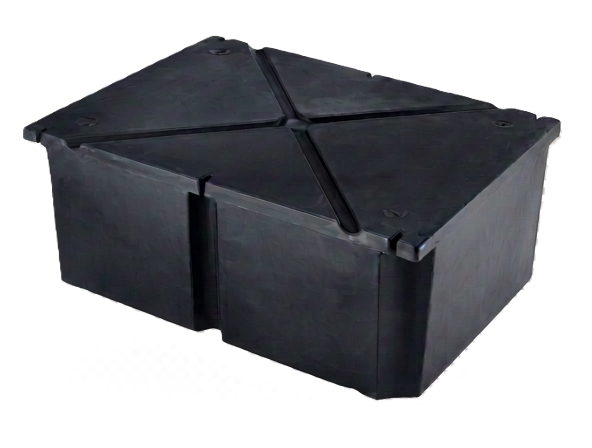
Float drums are the foundation of any floating dock system. Without the right flotation, even the best-built dock frame will underperform — sitting too low in the water, riding unevenly, or failing prematurely. At TechniDock, we've been supplying float drums to marinas, municipalities, yacht clubs, and residential customers for over 40 years. This guide covers everything you need to know to choose the right flotation for your project.
What Are Float Drums?
Float drums — also called dock floats, pontoon floats, or dock barrels — are hollow, sealed containers made from high-density polyethylene (HDPE) or rotationally molded polyethylene. They are attached to the underside of a dock frame and provide the buoyancy that keeps the dock floating at the correct height above the waterline.
Unlike foam-filled floats, polyethylene float drums are hollow and sealed, which means they are not susceptible to waterlogging over time. A properly sealed drum will maintain its buoyancy indefinitely as long as the shell remains intact.
How Float Drums Work
Buoyancy is governed by Archimedes' principle: an object submerged in water displaces a volume of water equal to its own volume, and the buoyant force equals the weight of that displaced water. Fresh water weighs approximately 62.4 pounds per cubic foot; salt water is slightly denser at around 64 pounds per cubic foot.
A float drum rated for a certain load capacity will support that weight while keeping the drum at or near the waterline. When sizing flotation for a dock, engineers calculate the total dead load (the weight of the dock structure itself) plus the live load (people, equipment, boats tied alongside) and select drums with enough combined buoyancy to support that load with appropriate freeboard — the distance the dock surface sits above the waterline.
Freeboard matters. A dock that sits too low in the water is dangerous and uncomfortable. Most commercial dock designs target 12 to 18 inches of freeboard under full live load conditions.
TechniDock Float Drum Materials
All TechniDock float drums are manufactured from virgin, UV-stabilized polyethylene resin. We do not use recycled material in our float drums because recycled resin can have inconsistent density and impact resistance, which affects long-term performance in marine environments.
Key material properties:
- UV stabilization — prevents degradation from prolonged sun exposure, which is critical for drums that are partially exposed above the waterline
- Impact resistance — polyethylene absorbs impacts from boat hulls, ice, and debris without cracking or shattering
- Chemical resistance — unaffected by saltwater, fuel spills, bilge water, and common marina chemicals
- Temperature performance — maintains flexibility and impact resistance in cold climates, unlike some rigid plastics that become brittle below freezing
Float Drum Sizes and Configurations
TechniDock offers over 100 float drum models across three product families. Dimensions are expressed in inches (width × length × depth).
Standard Polyethylene Float Drums
Our standard line covers the most common dock flotation applications. Popular sizes include:
- 24" × 48" × 12" — ideal for residential docks and light-duty applications
- 24" × 48" × 16" — increased depth for higher load capacity in the same footprint
- 24" × 48" × 20" — our most popular residential/light commercial size
- 36" × 48" × 16" — wider drum for improved stability
- 48" × 48" × 16" — square configuration for maximum buoyancy per unit
Blow-Molded Float Drums
Our blow-molded drums are manufactured using a different process that produces a thinner wall with a smooth exterior finish. These drums are well-suited for applications where appearance matters — such as resort docks, yacht clubs, and high-end residential installations — and where the load requirements are moderate.
Blow-molded drums are designated with a "BM" suffix in our part numbering system (e.g., F-2412BM).
Heavy-Duty Commercial Drums
For commercial marinas, ferry terminals, and high-traffic facilities, we offer heavy-duty drums with thicker walls and reinforced attachment points. These drums are designed to withstand the additional stress of large vessel wash, heavy equipment, and year-round use in demanding environments.
Understanding the Part Number System
TechniDock float drum part numbers encode the drum dimensions directly. The format is:
F-[Width in feet][Length in feet]
For example:
- F-2412 = 2 feet wide × 4 feet long × 12 inches deep (24" × 48" × 12")
- F-2416 = 2 feet wide × 4 feet long × 16 inches deep (24" × 48" × 16")
- F-2412BM = same dimensions, blow-molded construction
This makes it straightforward to identify the drum dimensions from the part number alone.
How to Calculate Flotation Requirements
Sizing flotation for a dock project involves a few key steps:
1. Calculate the dead load. Add up the weight of all structural components: aluminum extrusions, decking, hardware, cleats, electrical conduit, and any fixed equipment. For aluminum dock systems, a typical 8' × 20' dock section might weigh 800 to 1,200 pounds depending on the decking material.
2. Estimate the live load. Live load depends on the intended use. Residential docks typically use 40 to 60 pounds per square foot for design purposes. Commercial marinas and public facilities often design for 100 pounds per square foot or more.
3. Determine total buoyancy required. Add dead load and live load, then add a safety factor (typically 1.5× to 2×) to ensure adequate freeboard under all conditions.
4. Select drums. Choose drums whose combined rated buoyancy meets or exceeds your total required buoyancy. Distribute drums evenly under the dock frame to ensure level flotation.
5. Check freeboard. Verify that the selected drums will provide adequate freeboard (typically 12–18 inches) under full load conditions.
If you're unsure about the calculations, TechniDock's engineering team is available to assist with flotation sizing for your specific project.
Installation Tips
Float drums are typically attached to the dock frame using stainless steel hardware — bolts, straps, or cradles depending on the drum design and frame configuration. Key installation considerations include:
- Use stainless steel hardware exclusively. Galvanized hardware will corrode in marine environments, eventually failing and releasing the drum. All fasteners, straps, and brackets should be 316 stainless steel.
- Allow for water level fluctuation. In tidal areas or lakes with seasonal water level changes, ensure the drum attachment allows the dock to rise and fall freely without binding.
- Inspect attachment points annually. Check straps, bolts, and cradles for wear, corrosion, or loosening. Tighten or replace hardware as needed.
- Keep drums clean. Algae and marine growth on drum surfaces can add weight over time. An annual cleaning with a mild detergent will keep drums performing as designed.
Float Drums vs. Foam-Filled Floats
A common question is whether polyethylene float drums or foam-filled floats are the better choice. Both have their place, but for most commercial and residential dock applications, polyethylene drums offer significant advantages:
| Feature | Polyethylene Drums | Foam-Filled Floats |
|---|---|---|
| Waterlogging | Not susceptible | Can absorb water over time |
| Repairability | Replaceable individually | Difficult to repair |
| Load capacity | High, predictable | Varies with age |
| Cost | Moderate | Lower initial cost |
| Longevity | 20+ years | 10–15 years typical |
For permanent installations and commercial applications, the long-term performance advantage of polyethylene drums typically outweighs the lower initial cost of foam floats.
Ordering Float Drums from TechniDock
TechniDock ships float drums throughout the United States. Our full catalog of over 100 models is available on our Float Drums page, organized by size for easy reference. Volume discounts are available for large orders — contact us for pricing on commercial quantities.
Whether you're building a new dock from scratch or replacing worn-out flotation on an existing system, TechniDock has the float drums to keep your dock performing at its best for decades to come.


