
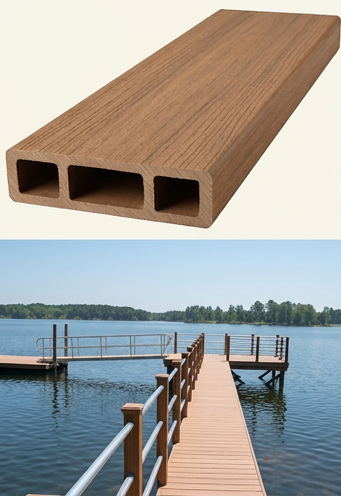
The decking surface is the part of your dock you interact with every day — you walk on it, sit on it, and depend on it to be safe and comfortable in wet conditions. Choosing the right decking material is one of the most important decisions in any dock project, and it affects not just the look of the finished dock but its safety, maintenance requirements, and long-term cost of ownership.
TechniDock offers three primary decking options: aluminum, composite, and pressure-treated wood. Each has distinct advantages and tradeoffs. This guide gives you the information you need to make the right choice for your project.
The Most Important Factor: Slip Resistance
Before comparing aesthetics or cost, let's address the most critical performance requirement for any dock decking: slip resistance. A dock surface that becomes slippery when wet is a safety hazard, plain and simple. Every year, people are injured — and some are killed — in falls on wet dock surfaces.
All three decking materials can be made slip-resistant, but they achieve it differently and maintain it differently over time.
Aluminum decking achieves slip resistance through surface texture — either an open-bar grating pattern that provides inherent grip, or a solid plank with a raised diamond or serrated pattern pressed into the surface. Aluminum's slip resistance is permanent and does not degrade over time. It cannot be painted over or worn smooth.
Composite decking typically has a textured surface profile that provides good slip resistance when new. High-quality composite products maintain their texture well over time. Lower-quality products can become smoother as the surface weathers. Look for composite products with a co-extruded cap layer, which protects the surface texture from wear.
Pressure-treated wood has natural grain texture that provides some slip resistance when new, but wood surfaces become smoother with weathering and foot traffic. Algae and mildew growth — common on wood in wet environments — dramatically reduces slip resistance. Regular cleaning and the application of anti-slip coatings or strips are necessary to maintain safe footing on wood decking.
Bottom line: Aluminum is the most reliably slip-resistant option over the long term. Composite is a close second with quality products. Wood requires the most active maintenance to remain safe.
Aluminum Decking
Types of Aluminum Decking
Open-bar grating is the most durable and lowest-maintenance aluminum decking option. It consists of a grid of aluminum bars welded or swaged together, creating an open surface that allows water, light, and debris to pass through. The open design provides excellent drainage and slip resistance, and the inherent texture of the bar surface grips wet feet effectively.
Open-bar grating is the preferred choice for commercial applications, working docks, and any situation where maximum durability and minimum maintenance are priorities. The open design also minimizes shading of the water below, which is beneficial in environmentally sensitive areas.
Aluminum plank decking provides a solid surface with a slip-resistant finish. Planks are typically 4 to 6 inches wide with a raised pattern on the top surface. The solid surface is more comfortable underfoot than grating and is preferred for recreational docks where comfort is a priority.
TechniDock's aluminum plank decking is available in standard and heavy-duty profiles. The heavy-duty profile is recommended for commercial applications and high-traffic areas.
Aluminum Decking Advantages
- Virtually maintenance-free — no painting, staining, sealing, or anti-slip treatment required
- Permanent slip resistance — surface texture does not wear away or degrade
- Corrosion-resistant — performs in salt water, fresh water, and brackish water without surface treatment
- Long service life — 30 to 50 years in normal service
- Lightweight — reduces load on flotation and framing
- Recyclable — significant end-of-life value
Aluminum Decking Disadvantages
- Higher initial cost than wood
- Can be hot in direct sun — aluminum conducts heat, and dark-colored aluminum surfaces can become uncomfortably hot on sunny summer days. Light-colored or natural aluminum finishes minimize this effect.
- Industrial appearance — some homeowners prefer the warmer look of wood or composite
Best Applications for Aluminum Decking
Commercial marinas, yacht clubs, fishing piers, public waterfront facilities, and any application where long-term performance and minimal maintenance are priorities.
Composite Decking
What Is Composite Decking?
Composite decking is made from a blend of wood fiber and plastic resin, typically polyethylene or polypropylene. The wood fiber provides stiffness and a natural appearance; the plastic resin binds the material together and provides moisture resistance.
Modern composite decking products use a co-extrusion process to apply a protective cap layer over the core material. This cap layer — typically a solid plastic shell — protects the core from moisture, staining, and UV degradation, and provides the surface texture and color.
TechniDock's composite decking option uses a premium co-extruded product specifically selected for marine applications.
Composite Decking Advantages
- Natural wood appearance — composite decking looks like wood without the maintenance
- Low maintenance — no staining, sealing, or painting required; periodic cleaning with soap and water is sufficient
- Good slip resistance — quality composite products maintain their surface texture well
- Splinter-free — unlike wood, composite decking does not splinter or develop rough edges with age
- Consistent appearance — composite decking does not warp, cup, or develop the uneven surface that weathered wood often shows
- Fade resistance — quality co-extruded products maintain their color well over time
Composite Decking Disadvantages
- Higher initial cost than wood (though lower than aluminum in most cases)
- Can retain heat — composite decking can become warm in direct sun, though generally not as hot as aluminum
- Not as durable as aluminum — composite decking can be scratched or gouged by heavy equipment or sharp objects
- Quality varies significantly — there is a wide range of composite decking quality on the market; lower-quality products may fade, stain, or lose their surface texture prematurely
Best Applications for Composite Decking
Residential docks, yacht clubs, resort marinas, and any application where the appearance of wood is desired without the maintenance burden.
Pressure-Treated Wood Decking
Types of Wood Used for Dock Decking
Pressure-treated southern yellow pine is the most common wood used for dock decking in the eastern United States. It is treated with copper-based preservatives (currently ACQ or CA-C) that resist rot and insect damage. It is widely available and has a lower initial cost than aluminum or composite.
Ipe and other tropical hardwoods are sometimes used for high-end residential docks. These dense, naturally rot-resistant woods have excellent durability and a beautiful appearance, but they are expensive and require periodic oiling to maintain their appearance.
Cedar is naturally rot-resistant and has a pleasant appearance, but it is softer than pine and less durable in high-traffic applications.
Wood Decking Advantages
- Lower initial cost than aluminum or composite
- Traditional appearance — many homeowners prefer the look of natural wood
- Easy to work with — wood can be cut, drilled, and fastened with standard tools
- Widely available — pressure-treated lumber is available at any lumber yard
Wood Decking Disadvantages
- High maintenance — wood requires regular cleaning, sealing or staining, and anti-slip treatment to remain safe and attractive
- Shorter service life — even pressure-treated wood typically lasts 10 to 20 years in a dock application before requiring replacement
- Splinters — weathered wood develops splinters and rough edges that are uncomfortable and can cause injury
- Warping and checking — wood expands and contracts with moisture and temperature changes, leading to warping, cupping, and surface checking over time
- Algae and mildew — wood surfaces in wet environments are prone to algae and mildew growth, which reduces slip resistance and accelerates deterioration
- Environmental concerns — copper-based preservatives in pressure-treated wood leach into the water over time; some jurisdictions restrict or prohibit pressure-treated wood in aquatic environments
Best Applications for Wood Decking
Budget-conscious projects where lower initial cost is the priority, temporary or short-term installations, and applications where the traditional wood appearance is strongly preferred and the owner is committed to the required maintenance.
Side-by-Side Comparison
| Factor | Aluminum | Composite | Pressure-Treated Wood |
|---|---|---|---|
| Initial cost | High | Medium | Low |
| Maintenance | Minimal | Low | High |
| Service life | 30–50 years | 20–30 years | 10–20 years |
| Slip resistance | Excellent (permanent) | Good (maintained) | Fair (requires treatment) |
| Appearance | Industrial/modern | Natural wood look | Natural wood |
| Weight | Light | Medium | Heavy |
| Environmental impact | Low | Low | Moderate |
| Total cost of ownership | Lowest | Medium | Highest |
Which Decking Is Right for You?
Choose aluminum if: You want the lowest long-term cost of ownership, maximum durability, and minimal maintenance. You're building a commercial facility, a high-traffic dock, or a dock that will be in service for decades. You're comfortable with a modern, industrial aesthetic.
Choose composite if: You want the appearance of wood without the maintenance. You're building a residential dock or an upscale facility where aesthetics matter. You're willing to pay a moderate premium over wood for significantly better performance.
Choose wood if: Initial cost is the primary constraint. You're building a temporary or short-term installation. You're committed to the maintenance required to keep wood safe and attractive.
TechniDock's Recommendation
For most dock projects — residential and commercial alike — we recommend aluminum or composite decking over pressure-treated wood. The long-term cost of ownership is lower, the safety performance is better, and the maintenance burden is dramatically reduced. The higher initial cost is an investment that pays dividends over the life of the dock.
That said, the right choice depends on your specific situation, budget, and preferences. Our team is happy to discuss the options and help you make the best decision for your project. Contact TechniDock to get started.


